
Table of Contents
Introduction
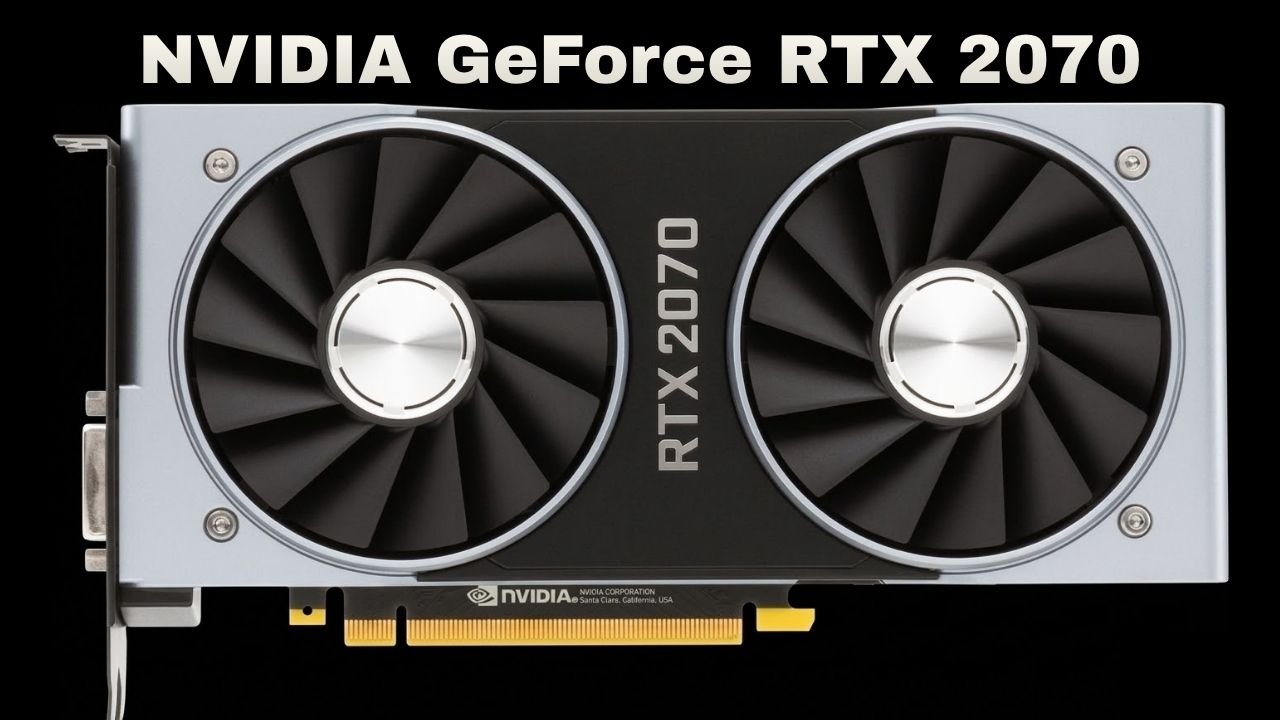
Back in 2018, the NVIDIA GeForce RTX 2070 made gaming more exciting for a lot of people. It brought features like ray tracing and gave really good performance for both 1080p and 1440p gaming without costing as much as the top-end cards.
Later on, NVIDIA also released the RTX 2070 Super, which was a stronger version of the same series. Still, the original RTX 2070 remained a popular choice and is still used by many gamers even today.
It may not be a new GPU anymore, but it can still handle many modern games quite well. The real question now is simple: is it still worth buying today, especially if you are on a budget or upgrading from an older card?
Specifications
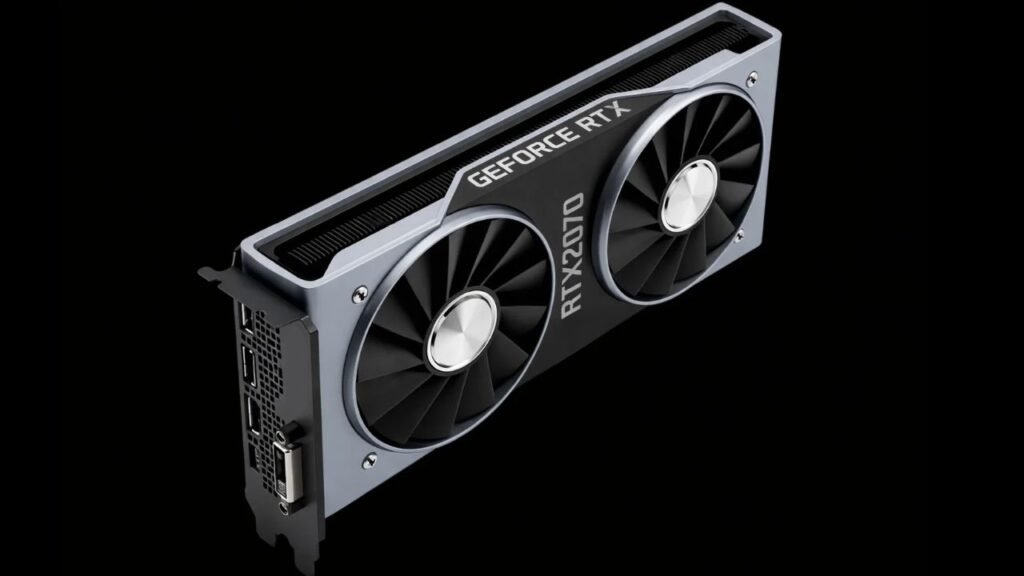
| Feature | RTX 2070 |
|---|---|
| GPU Architecture | Turing |
| VRAM | 8GB GDDR6 |
| Base Clock | 1410 MHz |
| Boost Clock | 1620 MHz |
| CUDA Cores | 2304 |
| TDP | 175W |
| Ray Tracing / DLSS | Yes |
| Memory Bus | 256-bit |
| Recommended PSU | 550W |
Synthetic Benchmarks
Synthetic benchmarks help you understand where the RTX 2070 stands, but they don’t always tell the full story. Looking at the scores, it’s clearly ahead of older GTX 10-series cards, but still behind the RTX 2080. That part is expected.
What’s interesting is how this translates into real games. The gap you see in benchmarks doesn’t always feel the same during actual gameplay, especially at 1080p where differences can be harder to notice.
So while these numbers are useful for comparison, they shouldn’t be the only thing you rely on when judging performance.
Looking at the benchmark scores, the NVIDIA GeForce RTX 2070 sits comfortably between the older GTX 10-series cards and the higher-end NVIDIA GeForce RTX 2080. It outperforms the NVIDIA GeForce GTX 1070, NVIDIA GeForce GTX 1070 Ti, and NVIDIA GeForce GTX 1080, while staying close to AMD’s Radeon RX Vega 64.
In simple terms, it’s still a solid choice for modern 1080p and 1440p gaming. It won’t quite match the top-tier RTX 2080, but it handles modern DirectX 12 games better than the older cards, making it a reliable option for most gamers today.
Gaming Performance
The Nvidia GeForce RTX 2070 is still fine for gaming, but you have to be a bit realistic with expectations.
At 1080p, there’s not much to worry about. Most games run smoothly on high settings, and if you play competitive titles, it easily handles high frame rates. 1440p is where things start to get a bit tricky. It’s still playable, but in newer AAA games, you’ll notice that you can’t just max everything out anymore. You’ll have to adjust a few settings to keep things stable.
Compared to older cards like the GTX 1070 and 1070 Ti, the difference is obvious. But if you’re coming from a GTX 1080 or something like Vega 64, the upgrade doesn’t feel that big, and it really depends on the game you’re playing.
Looking at the numbers, the RTX 2070 is clearly faster than the GTX 1070 and 1070 Ti. However, when compared to cards like Vega 56 and Vega 64, the difference is quite small, and performance stays very close.
This means the RTX 2070 is an upgrade over older GPUs, but not a huge jump, especially when compared to higher-end cards like the RTX 2080.
Price and Availability
The Nvidia GeForce RTX 2070 launched with a MSRP of $499, putting it right in the middle of NVIDIA’s lineup. It gives you solid performance without forcing you to pay for the pricier flagship cards.
Looking at the other GPUs we’ve mentioned in this blog, it’s clear where the 2070 stands. The RTX 2080 and GTX 1080 were more expensive at launch, while AMD’s RX Vega 64 and RX Vega 56 also cost more than the 2070. Even cards like the GTX 1070 Ti and GTX 1070 were close in price, but the 2070 still strikes the best balance between cost and performance.
Keep in mind that these numbers are just MSRPs. On sites like eBay, Amazon, or Newegg, prices can fluctuate quite a bit depending on stock, demand, and region.
Tip: Always check current listings before buying, because GPU prices change frequently.
RTX 2070 vs RTX 2070 Super
We compared the RTX 2070 and RTX 2070 Super side by side:
RTX 2060 vs RTX 2070
See our full RTX 2060 vs RTX 2070 comparison here.
RTX 2070 vs Other GPUs
| GPU | VRAM | Relative to RTX 2070 |
|---|---|---|
| RTX 2070 Super | 8GB GDDR6 | Slightly Faster |
| RTX 2060 | 6GB GDDR6 | Slower |
| RTX 2060 Super | 8GB GDDR6 | Slightly Faster |
| RX 6600 XT | 8GB GDDR6 | Slightly Slower |
| RTX 3060 | 12GB GDDR6 | Slightly Faster |
| RTX 3070 | 8GB GDDR6 | Faster |
| RX 590 | 8GB GDDR5 | Slower |
| Arc A770 | 16GB GDDR6 | Slightly Faster |
| GTX 1650 Super | 4GB GDDR6 | Slower |
| GTX 1660 Super | 6GB GDDR6 | Slower |
| RX 6400 | 4GB GDDR6 | Slower |
| RX 5500 XT | 8GB GDDR6 | Slower |
| GTX 1050 Ti | 4GB GDDR5 | Slower |
| GTX 1080 | 8GB GDDR5X | Slightly Faster |
| RTX 4070 | 12GB GDDR6X | Much Faster |
| GTX 1070 | 8GB GDDR5 | Slightly Slower |
| GTX 1070 Ti | 8GB GDDR5 | Slightly Slower |
| RX Vega 56 | 8GB HBM2 | Slightly Slower |
| RX Vega 64 | 8GB HBM2 | Similar |
| RTX 4060 | 8GB GDDR6 | Slightly Slower |
Who Should Buy Nvidia GeForce RTX 2070?
Buy RTX 2070 If:
- You want smooth 1080p or 1440p gaming without paying top-tier prices.
- You want ray tracing and DLSS on a mid-range card.
- You need a balanced card for modern games without going overboard on budget.
- You might overclock to get a little extra performance.
Avoid RTX 2070 If:
- You want the fastest GPU, RTX 2080 or 2080 Ti are better.
- You mainly play 4K games at high settings.
- You want the latest generation features or best efficiency.
- Low power draw is a big priority.
Final Verdict
The Nvidia GeForce RTX 2070 is still a good card, and it even makes 4K gaming somewhat achievable for a mid-range setup. That said, at $499 it’s not exactly cheap, and the model we looked at costs even more $599. Prices should come down once AMD Navi and the new Nvidia Super cards arrive, so that’s something to watch out for.
It depends on what card you’re upgrading from. If you’re coming from a GTX 1070 Ti or better, you probably won’t see a big jump in frame rates. Vega users won’t feel a strong push to switch either.
The real perks of the RTX 2070 are ray tracing and DLSS. If those don’t matter much to you, there’s honestly more reason to wait than to rush out and buy it right now.
