
Table of Contents
Introduction
The RX 580 vs RX 590 comparison still matters in 2026 because both GPUs are widely available in the used market at budget-friendly prices.
But here’s the real question: can they still handle modern games smoothly, or are they outdated power-hungry cards that only look good on paper?
Let’s look at what actually matters, real FPS, power draw, heat, and whether either card is still worth buying in 2026.
RX 580 vs RX 590 Specs Comparison
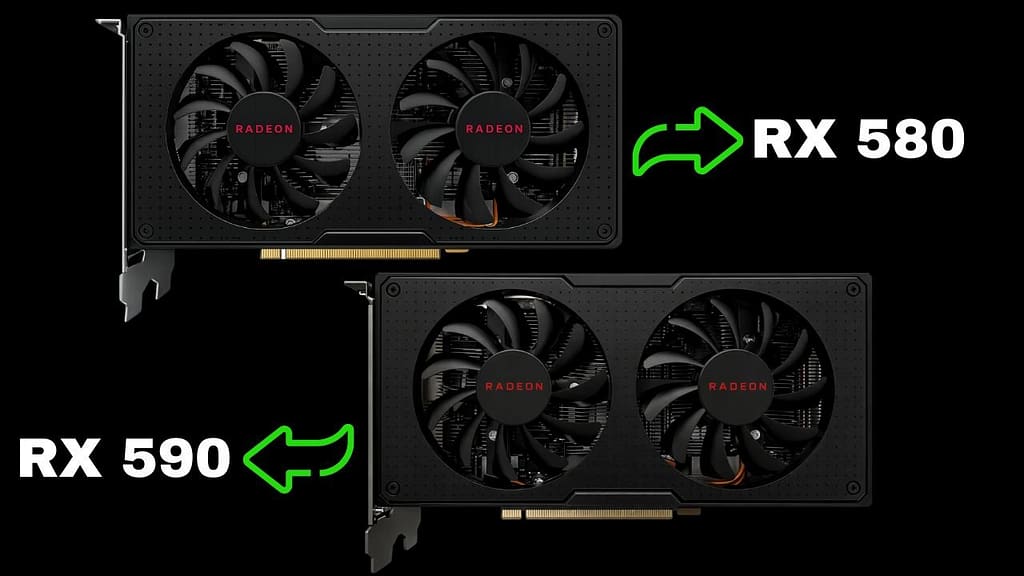
When comparing RX 580 vs RX 590 on paper, the differences look bigger than they actually feel during real gameplay.
| Feature | RX 580 | RX 590 |
|---|---|---|
| GPU Architecture | Polaris 20 | Polaris 30 |
| Base Clock | 1257 MHz | 1469 MHz |
| Boost Clock | 1340 MHz | 1545 MHz |
| VRAM | 8GB GDDR5 | 8GB GDDR5 |
| Memory Bus Width | 256-bit | 256-bit |
| Power Consumption | 185W | 225W |
| Recommended PSU | 500W | 550W |
Both GPUs use the same Polaris architecture, the RX 590 isn’t a new generation, it’s basically a higher-clocked RX 580 that runs at more power. That’s why performance is only slightly better. Neither card supports modern features like ray tracing or DLSS, and they’re not very power-efficient compared to newer GPUs. Still, the 8GB VRAM is useful for 1080p gaming, but the main trade-off here is simple: the RX 590 gives a small FPS boost at the cost of more heat and higher power usage.
RX 580 vs RX 590 Gaming Performance
AAA Games
Here’s how both cards perform in popular AAA titles at 1080p:
In practical terms, That small difference usually doesn’t change your settings, smoothness, or overall experience. You can see it in benchmarks, but you probably won’t feel it during gameplay.
eSports Games
eSports titles are less demanding, and both cards perform exceptionally well:
1080p vs 1440p Gaming
Both cards are mainly built for 1080p gaming, and when you move up to 1440p, performance takes a noticeable hit, especially in newer AAA titles where you’ll probably need to drop settings to medium. The RX 590 handles 1440p slightly better thanks to its higher clocks, but honestly, neither card is ideal for smooth high-refresh 1440p gaming in 2026, so if that’s your goal, a newer GPU is the smarter choice.
RX 570 vs RX 580 Comparison
Upgrading from the Radeon RX 570 to the Radeon RX 580 typically gives a 10–20% performance boost in most games. It’s noticeable, especially in newer AAA titles, but not transformative. If you already own an RX 570, upgrading only makes sense if you’re getting the RX 580 very cheaply.
Specs Comparison: RX 570 vs RX 580
| Feature | RX 570 | RX 580 |
|---|---|---|
| GPU Architecture | Polaris | Polaris |
| Stream Processors | 2048 | 2304 |
| Base Clock | 1168 MHz | 1257 MHz |
| Boost Clock | 1244 MHz | 1340 MHz |
| VRAM | 4GB / 8GB GDDR5 | 8GB GDDR5 |
| Memory Bus | 256-bit | 256-bit |
| Power Consumption | 150W | 185W |
| Recommended PSU | 450W | 500W |
The most important things here are the extra stream processors and higher clock speeds, which make the RX 580 clearly faster than the RX 570, especially in modern AAA games.
Power Consumption & Temperature
When looking at RX 580 vs RX 590, the biggest real-world difference isn’t FPS, it’s power draw and heat. The RX 580 typically consumes around 185W, which makes it easier to manage in most mid-range systems. A decent 500W power supply and normal case airflow are usually enough to keep temperatures under control. In practical terms, that means less fan noise, fewer overheating concerns, and fewer compatibility issues in older builds.
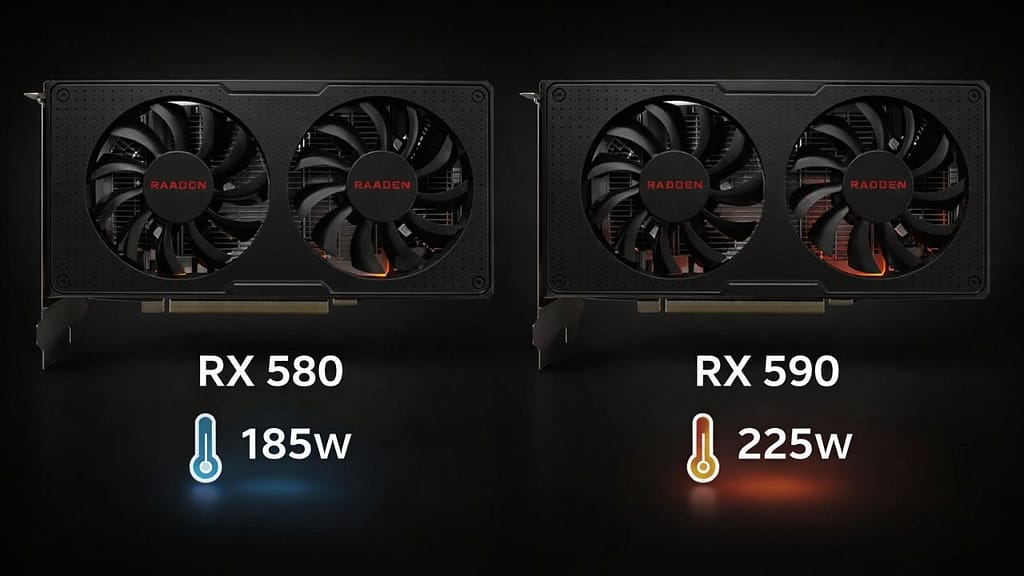
The RX 590 pushes the same architecture harder and can draw up to 225W under load. That extra power translates into more heat. A quality 550W PSU is recommended, and good case airflow becomes more important. If your power supply is older, generic, or already near its limit, the RX 590 can cause instability, higher temperatures, or even sudden shutdowns during heavy gaming sessions.
Simple way to think about it:
- Lower power → easier cooling → less stress on your system
- Higher power → slightly better performance → more heat to manage
If your GPU starts running hotter than expected or the fans become unusually loud, it’s important to check temperatures and system airflow. Ignoring heat issues over time can reduce performance and shorten hardware lifespan.
RX 580 vs RX 590 Popular Alternatives
If the Radeon RX 580 or Radeon RX 590 isn’t available, or if you’re considering something newer or more power-efficient, these GPUs are commonly compared in the same price range.
Below is a basic specs overview, but more importantly, we’ll explain what these cards actually mean in real-world gaming.
Basic Specs Comparison
| GPU | Architecture | VRAM | Memory Bus | Typical Power |
|---|---|---|---|---|
| RX 570 | Polaris | 4GB / 8GB GDDR5 | 256-bit | 150W |
| RX 580 | Polaris | 8GB GDDR5 | 256-bit | 185W |
| RX 590 | Polaris | 8GB GDDR5 | 256-bit | 225W |
| RX 5500 XT | RDNA | 4GB / 8GB GDDR6 | 128-bit | 130W |
| RX 6400 | RDNA 2 | 4GB GDDR6 | 64-bit | 53W |
| GTX 1660 Super | Turing | 6GB GDDR6 | 192-bit | 125W |
Beyond the RX 580 and RX 590, the RX 570 is cheaper but weaker in modern games. The RX 5500 XT is newer and more power-efficient, while the RX 6400 uses very little power but struggles with demanding AAA titles. If all are priced similarly, the GTX 1660 Super is the safest choice in 2026, as it offers better performance, runs cooler, and uses less power than both the RX 580 and RX 590.
Which One Should You Buy?
If you’re deciding between RX 580 vs RX 590, here’s the simple way to choose:
Buy RX 580 if:
Buy RX 590 if:
- You don’t mind higher power draw and heat for marginal gains
- You find it at a very small price difference compared to RX 580
- You want slightly higher FPS in modern or AAA games
- Your power supply and cooling are decent
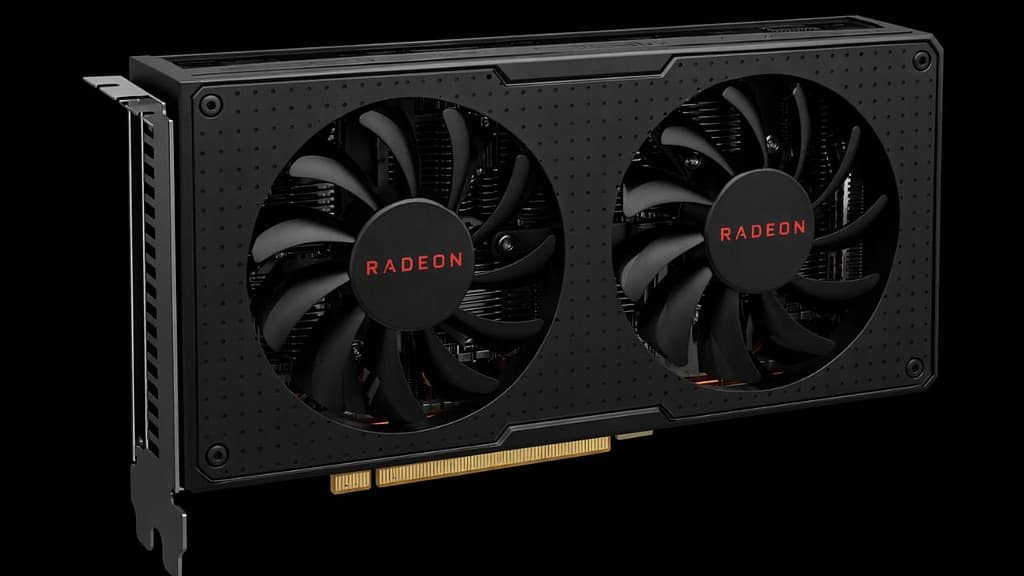
These are budget-only options, not long-term upgrade solutions. If prices are close to newer GPUs, it’s worth understanding how these cards compare to modern alternatives and what workloads they still make sense for.
Final Verdict
In the RX 580 vs RX 590 battle, the real-world difference at 1080p is smaller than many expect. While the RX 590 is slightly faster on paper, the extra power draw and heat make that gain feel minor in actual gameplay.
For most budget builds in 2026, the RX 580 is the smarter and safer choice. It runs cooler, draws less power, and usually offers better value in the used market. The RX 590 only makes sense if it’s priced very close and your system has good cooling and a reliable power supply.
Neither card is future-proof. Think of them as entry-level 1080p GPUs, fine for tight budgets, but not ideal long-term upgrade options.
