
Table of Contents
Introduction
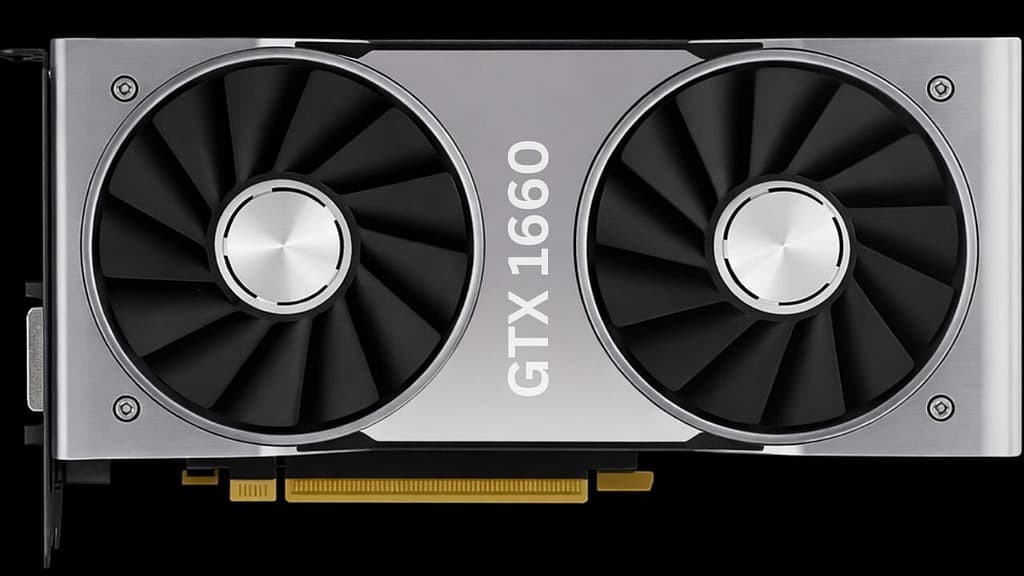
The Nvidia GeForce GTX 1660 sits in an awkward but interesting spot. It’s not a modern GPU, it’s not ray tracing capable, and it’s definitely not future-proof, yet people still search for it in 2026. Why? Because on the used market, it often shows up at tempting prices, and for pure 1080p gaming, it can still get the job done if your expectations are realistic.
Key Specifications
| Specification | GTX 1660 |
|---|---|
| Architecture | Turing |
| CUDA Cores | 1408 |
| VRAM | 6GB GDDR5 |
| Memory Bus | 192-bit |
| Base / Boost Clock | 1530 / 1785 MHz |
| TDP | 120W |
| Power Connector | 8-pin |
GTX 1660 Variants
Most GTX 1660 cards perform similarly on paper, but cooling and noise vary a lot in real use.
- Dual-fan models are noticeably quieter and maintain boost clocks better.
- Single-fan or compact cards run hotter under long gaming sessions.
- Factory OC versions give only a small FPS gain, don’t overpay for branding.
Cheap models save money upfront but usually compromise on thermals, which matters more than a few MHz.
GTX 1660 vs GTX 1660 Super
Desktop vs Laptop GTX 1660
This is where many buyers get misled.
The desktop GTX 1660 and the laptop GTX 1660 do not deliver the same experience:
- Laptop versions run at lower power limits
- Sustained performance drops in long gaming sessions
- Cooling quality varies heavily by laptop design
Warning: When checking benchmarks, always confirm whether the data comes from desktop or laptop hardware. Mixing them leads to unrealistic expectations.
1080p Gaming Performance
Esports Titles
In esports-focused games, the GTX 1660 still feels comfortable.
- CS2, Valorant, Rocket League, Fortnite
- High settings easily exceed 60 FPS
- Competitive settings often push well above that
Note: Performance here is more CPU-dependent than GPU-limited.
AAA Games
This is where expectations need to be realistic. The GTX 1660 is still capable, but it starts to show its limits in newer AAA titles.
- Medium settings are the sweet spot
- High settings are playable in older games
- Newer AAA titles expose the limits of 6GB VRAM
- Average FPS may look stable, but VRAM spikes can cause drops and stutters
Power Consumption & Efficiency
Power usage is one of the GTX 1660’s stronger points, especially for budget or older systems. In real-world gaming, it usually runs well below its 120W rating, so it doesn’t put much stress on the rest of your PC. A good 450–500W power supply is more than enough, even when paired with a mid-range CPU.
Because it draws less power, the card is also easier to manage overall:
- Less heat inside the case
- Quieter fan noise during gaming
- More stable performance in long sessions
Compared to older high-end GPUs, the GTX 1660 simply feels more relaxed to run. You don’t need an expensive PSU or heavy cooling, which makes it a practical choice for straightforward 1080p gaming builds.
Thermals, Noise & Stress Behavior
During extended gaming sessions, temperatures depend heavily on the card design and case airflow.
- Average gaming temperatures usually sit in a safe range
- Poor airflow or budget coolers push temps higher
- Thermal throttling is rare but possible in compact builds
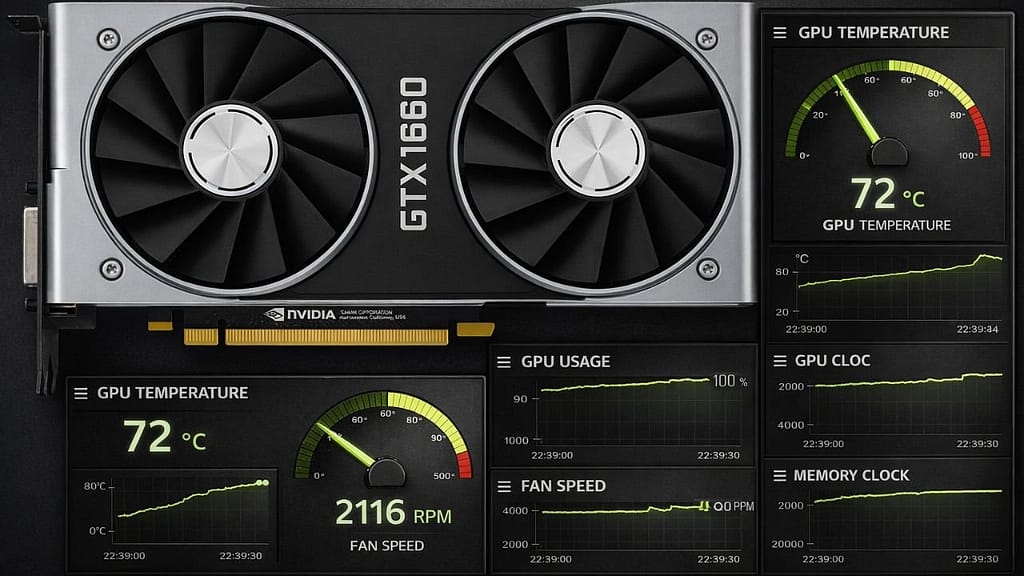
If you want to verify stability or cooling performance, running a proper GPU stress test helps reveal long-session behavior. Understanding average GPU temperature under load also gives a better idea of whether your setup is healthy or borderline.
GTX 1660 Drivers
Nvidia Driver support is still one of the GTX 1660’s strong points. Most modern games run without issues, and stability is generally solid. Nvidia hasn’t dropped support, the card just isn’t a priority anymore.
You shouldn’t expect any real performance gains from new drivers at this stage. Updates are mainly about stability and compatibility, not extra FPS. If your goal is smooth, predictable gaming rather than chasing benchmarks, the GTX 1660 still holds up well.
GTX 1660 vs Alternatives
| GPU | Relative Performance |
|---|---|
| GTX 1660 | Slower Baseline |
| GTX 1650 Super | Slower |
| GTX 1660 Super | Faster |
| GTX 660 | Slower (far slower) |
| RX 5600 XT | Noticeably Faster |
On the used market, better value options often exist. If prices are close, the GTX 1660 Super or RX 5600 XT usually make more sense.
Who Should Buy / Who Should Skip
Buy this GPU if:
- You game at 1080p
- You’re okay with medium settings
- You find it at a good used price
Skip it if:
- You want ultra settings in new games
- You plan 1440p gaming
- You expect long-term future-proofing
Used Market Tips
If you’re buying used:
- Check for excessive fan noise or rattling.
- Avoid cards with damaged heatsinks or missing screws.
- Ask about long gaming or mining usage when buying locally.
For price comparison and availability checks, platforms like Amazon and eBay can help you understand current used market trends.
Note: A clean, well-cooled card will age far better than a poorly treated one.
Final Verdict
The GTX 1660 is not a smart long-term investment, but it can still be a practical short-term solution. At the right price, it delivers solid 1080p performance with manageable power consumption and reliable drivers. Just don’t expect miracles — this card rewards realistic expectations and punishes overconfidence.
Note: If the price is right, it works. If it’s overpriced, walk away.
