
Table of Contents
Introduction
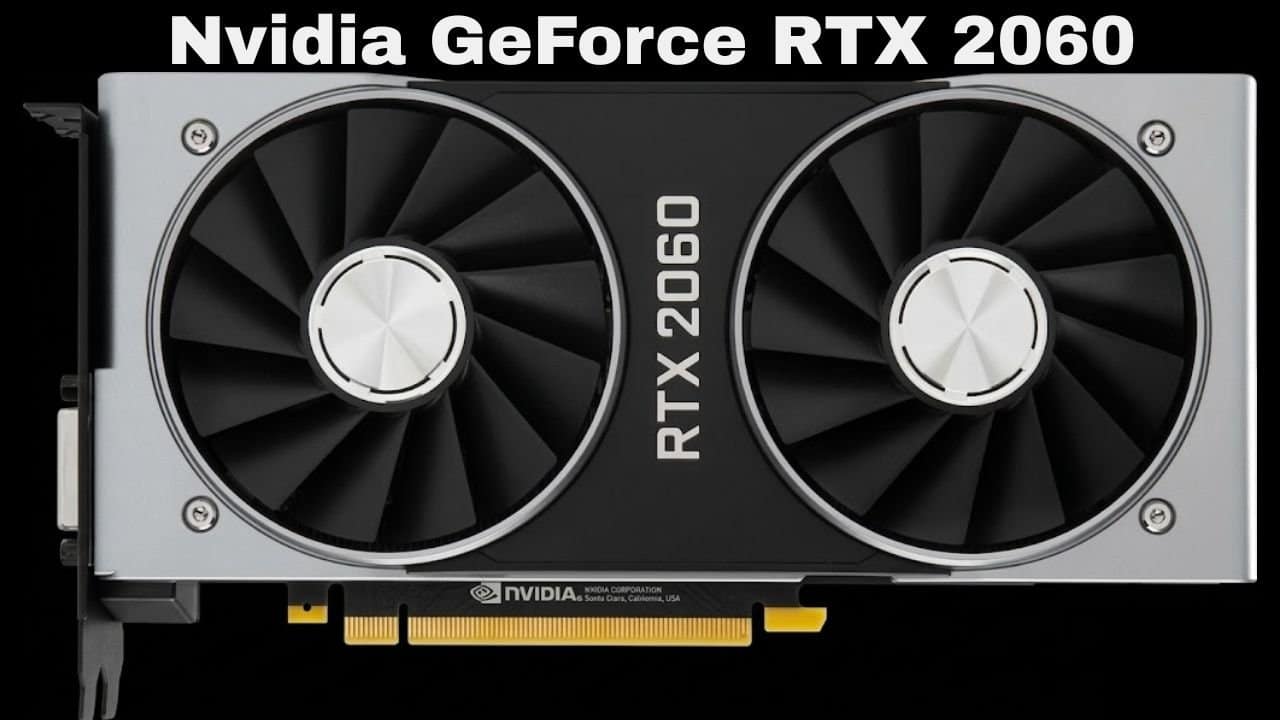
The Nvidia GeForce RTX 2060 was launched in 2019, and at that time, it was one of the most inspiring mid-range graphics cards. It came with 6GB VRAM and introduced ray tracing to a larger audience without being too expensive.
Even today, it still holds up surprisingly well for 1080p gaming, and in many games, it can even handle 1440p if you tweak the settings a bit.
When you compare it with newer cards like the RTX 3060, RX 6600, or even its own upgraded version, the RTX 2060 Super, the RTX 2060 might look a bit older on paper. But in real gameplay, it still manages to stay in the fight, especially if you’re on a tight budget.
The main question is whether it’s still worth buying in 2026?
Specifications
| Specification | Details |
|---|---|
| GPU | Nvidia GeForce RTX 2060 |
| Architecture | Turing |
| Launch Date | January 2019 |
| VRAM | 6GB GDDR6 |
| Memory Bus | 192-bit |
| Base Clock | 1365 MHz |
| Boost Clock | 1680 MHz |
| CUDA Cores | 1920 |
| Ray Tracing | Yes |
| DLSS Support | Yes |
| TDP | 160W |
If you look at it simply, the Nvidia GeForce RTX 2060 seems like a basic mid-range card, but in real use it gives strong 1080p gaming performance. Its 6GB VRAM can still handle most games easily, but in some newer games, you may need to lower the texture settings a bit to keep the game running smoothly.
Pricing & Availability
The Nvidia GeForce RTX 2060 launched at $349, and later dropped to $299 in early 2020.
At the time, it sat right between the RTX 2070 and older options like the GTX 1070 Ti. Compared to the RTX 3060, it’s cheaper, but you also get less performance and less VRAM.
Right now, there’s no fixed price. It depends on availability, condition, and where you’re buying from. Best approach is simple — check online stores like Amazon or ebay and also your local market before making a decision.
Key Upgrades & Performance
If you’re coming from an older card like the GTX 1060, moving to the Nvidia GeForce RTX 2060 actually feels like a proper upgrade. The biggest change is the addition of ray tracing and DLSS. In simple terms, games can look better and run smoother as long as the game supports these features.
It also uses faster memory, which helps it handle newer games a bit more comfortably compared to older GPUs.
Overall, this isn’t a small jump. For 1080p gaming especially, the difference is easy to notice.
Power Consumption
| GPU | Idle Power | Max Power | What It Means |
|---|---|---|---|
| Nvidia RTX 2060 | 10.6W | 165W | Balanced |
| Nvidia RTX 2070 | 11.6W | 190W | Higher usage |
| GTX 1070 Ti | 14.5W | 200W | Power hungry |
| GTX 1070 | 14.1W | 160W | Similar |
| GTX 1060 | 6.7W | 131W | Very efficient |
| Radeon RX Vega 56 | 6W | 168W | Mixed |
Temperature
| GPU | Idle Temp | Max Temp | Cooling |
|---|---|---|---|
| Nvidia RTX 2060 | 34°C | 72°C | Cool & Stable |
| Nvidia RTX 2070 | 30°C | 74°C | Stable |
| GTX 1070 Ti | 30°C | 83°C | Runs Hot |
| GTX 1070 | 30°C | 81°C | Warm |
| GTX 1060 | 31°C | 71°C | Very Cool |
| Radeon RX Vega 56 | 44°C | 69°C | Cool (High Idle) |
What You Actually Get
- Great for 1080p gaming
- 1440p is playable with some tweaks
- 4K is not its strong point
Compared to older cards like the GTX 1060, the RTX 2060 feels smoother and more stable. But higher-end cards still offer better overall performance.
That said, cards like the RTX 2070, RTX 2080, and AMD’s Radeon RX Vega 56 still have more raw power overall.
In real use, it’s pretty simple at 1080p, this card runs games smoothly without much effort.
1440p is still playable, but you’ll need to tweak some settings.
4K is where it starts to fall behind.
Gaming Performance
The Nvidia GeForce RTX 2060 is still a very decent card for gaming, especially if you’re playing at 1080p. At this resolution, games generally feel smooth. You don’t really have to think too much about settings, just set them to high and play. Even when the FPS drops a bit, it usually stays in a playable range.
If you move up to higher resolutions, things start to get a bit heavier. It still works, but now you have to lower some settings to keep things smooth.
Compared to older cards like the GTX 1060 or GTX 1070, the difference is easy to notice. It feels smoother and more stable overall.
At 1080p, this card sits in a sweet spot, smooth gameplay, solid FPS, and fun sessions. At 1440p, it still does well if you tweak a few settings. 4K? It can run some games, but you’ll need to turn down quality for smooth performance.
Keeping Cool
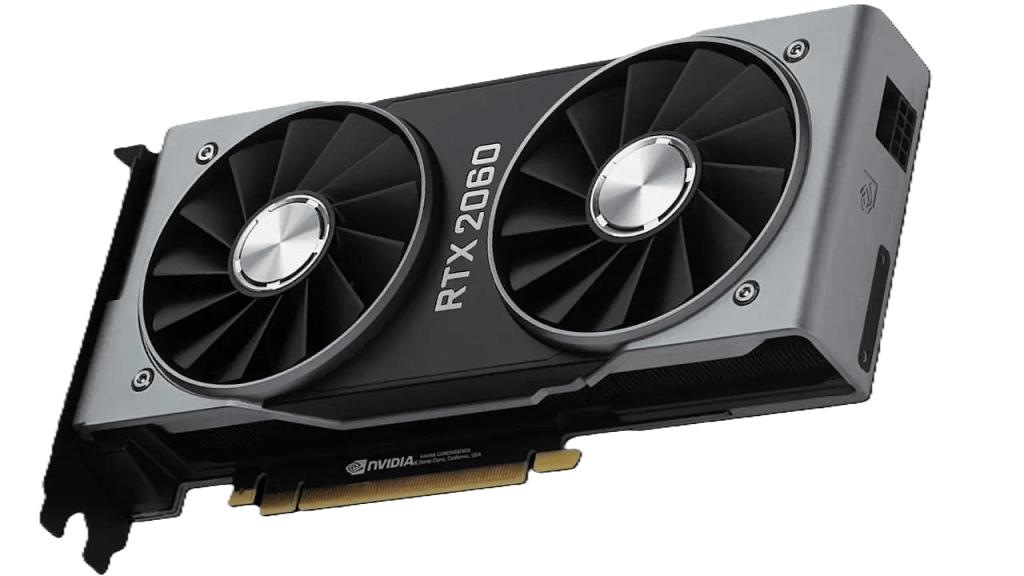
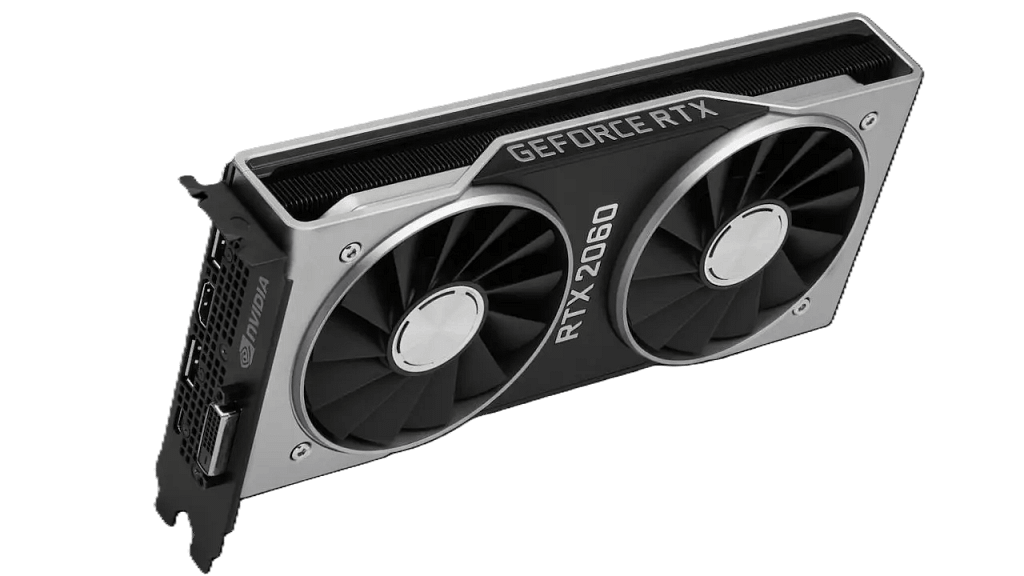
The RTX 2060 has a dual-fan cooler, so it stays nice and cool even during long gaming sessions. It’s quiet too, so you won’t get distracted by loud fans while playing.
RTX 2060 Equivalents
| Card | VRAM | Memory Type | Relative Speed vs RTX 2060 |
|---|---|---|---|
| GeForce RTX 2060 Super | 8GB | GDDR6 | Faster |
| GeForce RTX 2070 | 8GB | GDDR6 | Faster |
| GeForce GTX 1070 | 8GB | GDDR5 | Slightly Slower |
| GeForce GTX 1070 Ti | 8GB | GDDR5 | Slightly Faster |
| GeForce GTX 1080 Ti | 11GB | GDDR5X | Much Faster |
| GeForce RTX 3060 | 12GB | GDDR6 | Faster |
| Radeon RX 6600 | 8GB | GDDR6 | Slightly Faster |
| Radeon RX 6600 XT | 8GB | GDDR6 | Faster |
| Radeon RX 5600 XT | 6GB | GDDR6 | Slightly Slower |
| Intel Arc A770 | 16GB | GDDR6 | Faster |
| GeForce RTX 1660 Super | 6GB | GDDR6 | Slightly Slower |
| Radeon RX 6400 | 4GB | GDDR6 | Slower |
RTX 2060 Pros & Cons
| Aspect | RTX 2060 Pros | RTX 2060 Cons |
|---|---|---|
| Performance | Great for 1080p gaming | Struggles at 1440p ultra |
| VRAM | Fast GDDR6 memory | Only 6GB (can limit new games) |
| Ray Tracing | Supports RTX + DLSS | Ray tracing can slow FPS |
| Value | Good in used market | May struggle with future games |
| Features | DLSS, G-Sync, modern APIs | Doesn’t support newest DLSS features |
Who Should Buy Nvidia GeForce RTX 2060?
| Buy it if | Don’t buy it if |
|---|---|
| You want ray tracing without spending too much | You want a super cheap budget card |
| You want smoother FPS with DLSS | You mainly play at 1440p or 4K on high settings |
| You’re upgrading from an older GTX card | You need more VRAM for future games |
| Newer RTX 3000-series cards are too expensive or hard to find | You can pay extra for better GPUs like RTX 3060 or RX 6600 |
| You play mostly at 1080p | You want ultra settings + high FPS in every new game |
