
Table of Contents
Introduction
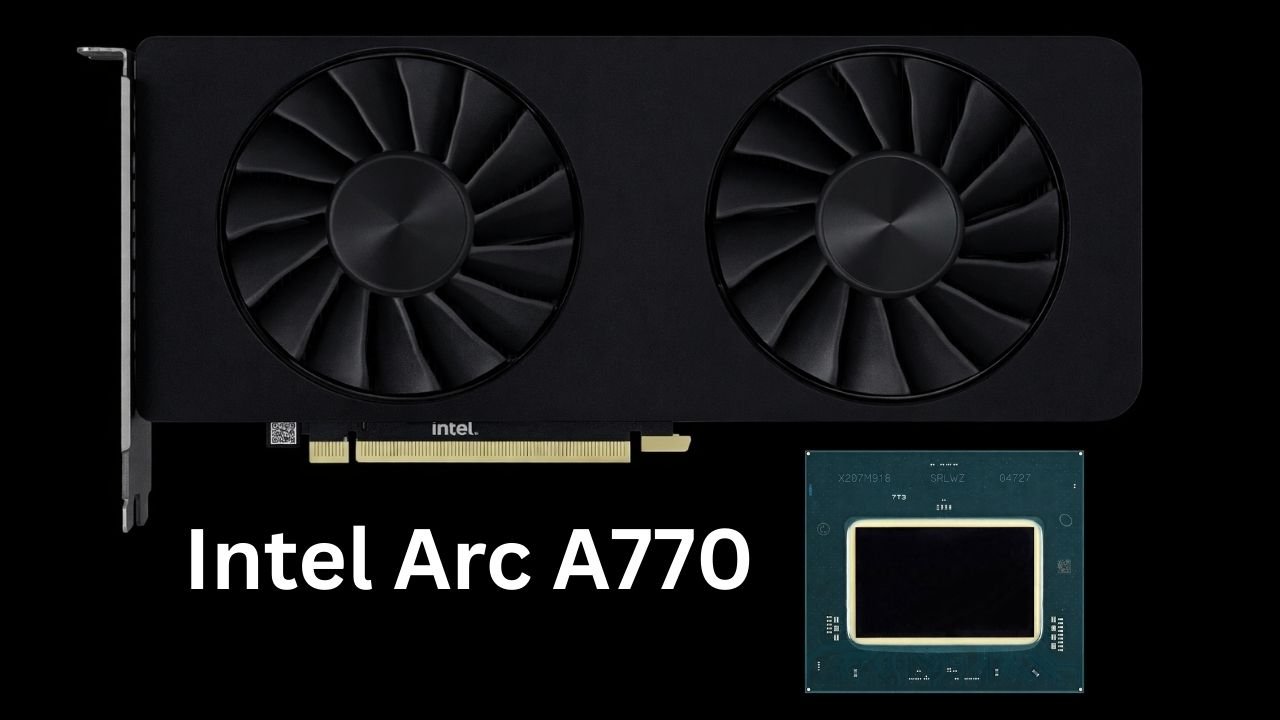
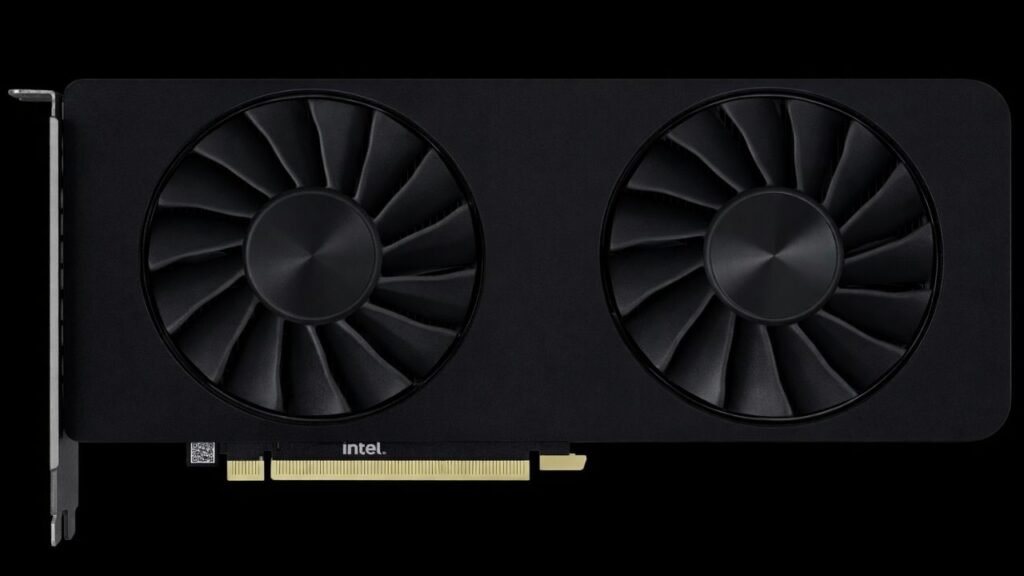
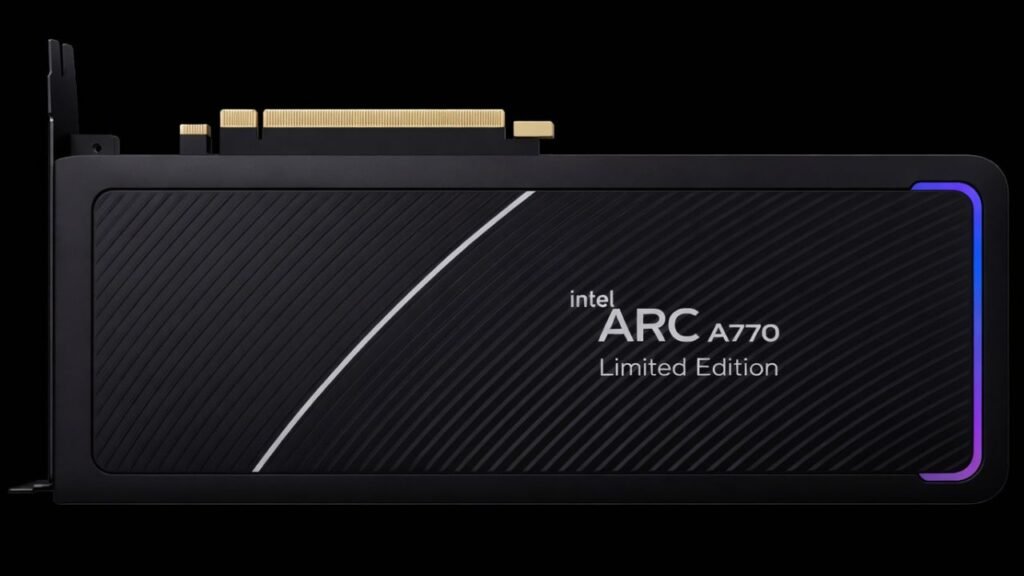
The Intel Arc A770 is Intel’s midrange gaming graphics card, aimed at people who want strong 1080p performance and enough power for 1440p in many games. It comes with a big 16GB of VRAM, which is more than most cards in this range, and supports modern features for gaming and video work. The card had a rough start because of driver problems, but things are much better now. These days, the A770 is mostly interesting for its price-to-performance and extra memory, as long as you’re okay with a few quirks here and there.
Specifications
| Specification | Intel Arc A770 |
|---|---|
| Architecture | Xe-HPG |
| VRAM | 16GB GDDR6 |
| Memory Bus | 256 bit |
| Memory Bandwidth | 560 GB/s |
| Xe Cores | 32 |
| Ray Tracing Units | 32 |
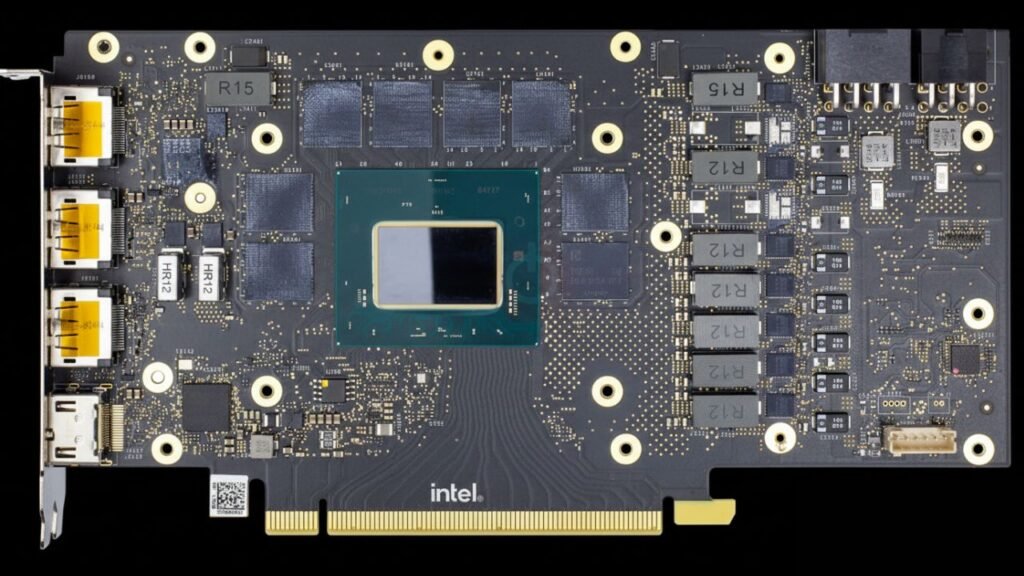
| Typical Board Power | 225W |
| PCIe Interface | PCIe 4.0 x16 |
| AV1 Hardware Encoding | ✅ Yes |
| DirectX Support | DX12 Ultimate |
Gaming Performance (1080p & 1440p)
The Arc A770 delivers solid midrange performance, but not in a perfectly consistent way. That’s the key theme you’ll see again and again.
1080p Esports Performance
In modern competitive titles, the A770 performs very well, especially in games built on newer engines.
- Strong results in DX12-based games
- High FPS in titles like Warzone and Fortnite (DX12 mode)
- More inconsistent in older DX11 esports games
Note: If your main library is newer multiplayer games, performance is closer to an RTX 3060 than people expect.
1080p AAA Games
It does especially well in:
- DX12 and Vulkan titles
- Games that use modern rendering techniques
- Situations where higher VRAM helps texture loading
However, some older or poorly optimized DX11 games can still show lower-than-expected FPS or stuttering compared to Nvidia and AMD cards.
1440p Gaming
This is where the 16GB VRAM starts to matter.
While the GPU core isn’t powerful enough for maxed-out 1440p in every game, the extra memory helps avoid texture pop-in and VRAM limits that 8GB cards can hit. You can comfortably play many modern titles at medium–high settings at 1440p, especially with upscaling.
Ray Tracing Performance
Ray tracing on the Arc A770 is usable — but only with realistic expectations.
In lighter RT implementations (like reflections or shadows on medium settings), the A770 can deliver playable performance at 1080p, especially with upscaling enabled. However, in heavy ray-traced titles such as Cyberpunk 2077 or Assassin’s Creed Valhalla, performance drops quickly without XeSS or FSR.
Note: Ray tracing is a bonus feature here, not a reason to buy the card.
XeSS Upscaling Support
Intel Arc GPUs support XeSS (Xe Super Sampling), Intel’s AI-based upscaling technology.
XeSS helps improve FPS in supported games while maintaining image quality similar to native resolution. It’s especially helpful at 1440p, where the A770 can struggle at higher settings.
While not as widely supported as DLSS, XeSS support is growing and works on both Intel and non-Intel GPUs in many titles.
Note: In supported games, XeSS can make the difference between “playable” and “smooth.”
Intel Arc A770 Price in 2026
The Arc A770 mostly exists in the used and discounted market now, and that’s where it becomes interesting.
It often sells for less than similarly performing Nvidia cards, mainly because:
- Intel’s GPU brand still lacks trust
- Early driver issues scared buyers
- Resale demand is lower than Nvidia/AMD
For buyers, that hesitation can actually be an advantage. If priced clearly below an RTX 3060, the A770 can offer better value per dollar, especially if you benefit from the 16GB VRAM.
Is 16GB VRAM on Arc A770 Actually Useful?
Yes — but not for the reason people think.
The A770 is not suddenly a 4K monster just because it has 16GB of memory. The GPU core still defines overall performance.
Where the extra VRAM does help:
- High-resolution texture packs
- Modded games
- Modern titles at 1440p
- Some newer titles that already exceed 8GB at high settings
Where it doesn’t magically help:
- Raw FPS in GPU-bound scenarios
- Ray tracing performance limits
Note: Think of it as headroom, not a power boost.
Intel Arc A770 Drivers
At launch, drivers had:
- Poor DX11 performance
- Random crashes
- Frame pacing issues
Things are very different now.
Intel has massively improved performance in DX12 and Vulkan, and most modern games run smoothly. However, DX11 titles can still be hit or miss compared to Nvidia’s mature drivers.
Note: The A770 performs best on systems with Resizable BAR enabled. Without it, performance can drop noticeably.
So are drivers “fixed”?
Yes — but they’re still not as plug-and-play reliable as Nvidia for every single game.
ReBAR / System Compatibility Warning
Intel Arc GPUs perform best on modern systems with Resizable BAR (ReBAR) enabled.
On older systems without ReBAR support, performance can drop significantly in some games. Before buying an Arc A770, users should check:
- CPU support for ReBAR
- Motherboard BIOS support
- ReBAR enabled in BIOS settings
Without this feature, the A770 may not deliver its expected performance.
This is one of the most important things buyers should know.
Intel Arc A770 Equivalent GPUs
When shopping for the Intel Arc A770, buyers usually compare it with other midrange graphics cards that offer similar performance and pricing. Here’s how it stacks up.
| GPU | Performance Class | Key Difference vs A770 |
|---|---|---|
| RTX 3060 | Very Similar | Better drivers, less VRAM (12GB) |
| RX 6600 XT | Similar | Faster in some games, only 8GB VRAM |
| RTX 2070 Super | Similar | Older card, higher power use |
| RTX 3060 Ti | Higher | More raw FPS, but only 8GB VRAM |
Buyers comparing alternatives to the Arc A770 often look at both newer Intel options and older Nvidia midrange cards. Within Intel’s lineup, models like the Arc B570 focus more on efficiency and architectural improvements rather than offering a large 16GB memory buffer. On the Nvidia side, older GPUs such as the GTX 1660 Super can still manage solid 1080p gaming, but they miss modern features like AV1 encoding and tend to fall behind in newer DX12-based titles.
Streaming, Editing & AV1 Advantage
Here’s where Arc quietly shines.
The A770 includes hardware AV1 encoding, which offers:
- Better video quality at lower bitrates
- Smaller file sizes
- Growing support on platforms like YouTube
Beyond gaming, modern GPUs are widely used for multimedia tasks like video editing and encoding, and the A770’s AV1 support helps deliver better quality at lower bitrates. Users focused more on professional workloads than gaming may instead look at workstation cards such as the Arc Pro B60, which prioritize stability over gaming performance.
Power Consumption & Thermals
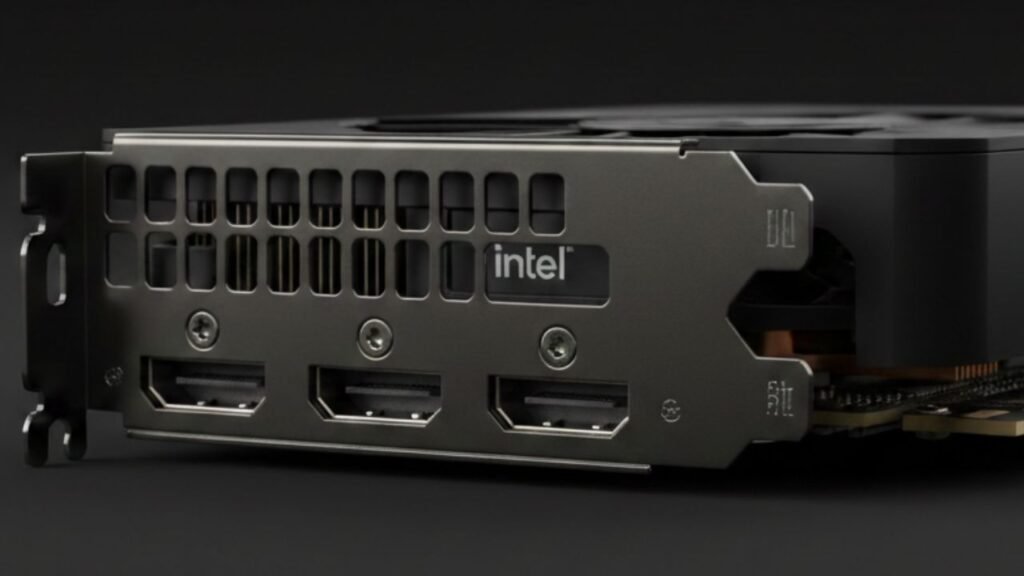
The A770 draws around 225W, which is higher than RX 6600 XT and closer to RTX 3060 levels.
That means:
- A decent quality PSU is required
- Expect moderate heat output
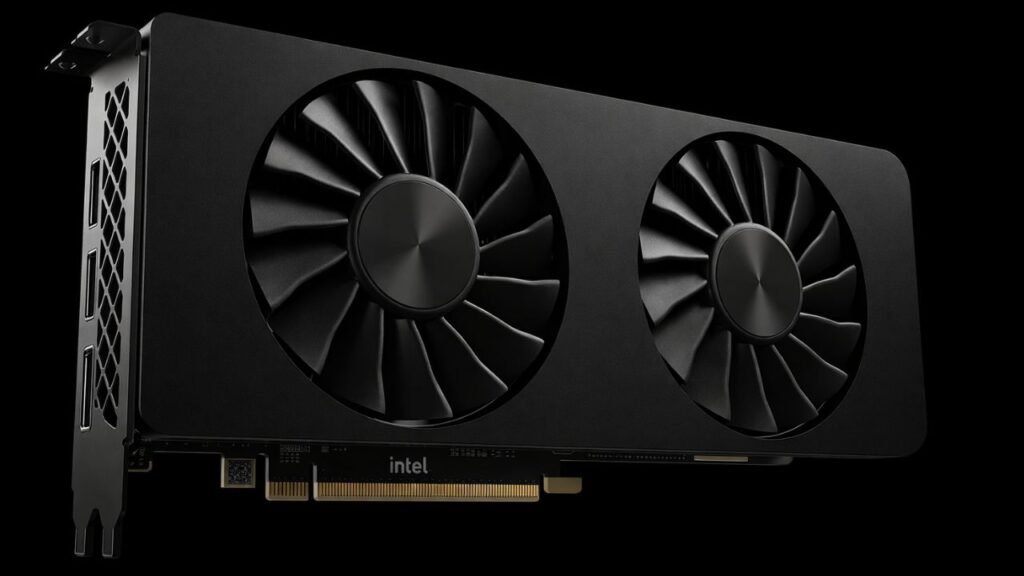
- Dual-fan and triple-fan models handle cooling better than compact versions
It’s not extreme, but it’s not a low-power card either.
Note: Idle power consumption can be higher than Nvidia and AMD cards, particularly in multi-monitor setups, though driver updates have improved this over time.
A quick stress test shows how hot the A770 runs and whether cooling is still healthy, and knowing the average safe GPU temperature range also helps you judge whether the card’s cooling is normal or a sign of aging thermal paste.
Who Should Buy the Intel Arc A770?
Good choice for:
- ✔ Gamers playing mostly modern DX12 titles
- ✔ Buyers getting a strong deal below RTX 3060 pricing
- ✔ Content creators who want AV1 encoding
- ✔ Users who don’t mind tweaking settings
Not ideal for:
- ❌ People playing lots of older DX11 games
- ❌ Users who want zero troubleshooting
- ❌ Small, low-wattage PSU systems
If you’re looking at very entry-level Intel GPUs instead, something like the Arc A310 targets basic display and light gaming use, not midrange performance like the A770.
Final Verdict
The Intel Arc A770 is no longer just an experiment. It’s a legitimate midrange GPU with strong modern-game performance, a generous 16GB VRAM buffer, and excellent media encoding features.
But it’s not for everyone.
If you want maximum stability across every old and new game, Nvidia still has the edge. If you want the best efficiency, AMD may be a better pick.
However, if the price is right, and your focus is modern games plus long-term VRAM headroom, the Arc A770 can be one of the most interesting value GPUs on the market in 2026.
It’s not the safest choice.
But for the right buyer, it’s a smart one.
